
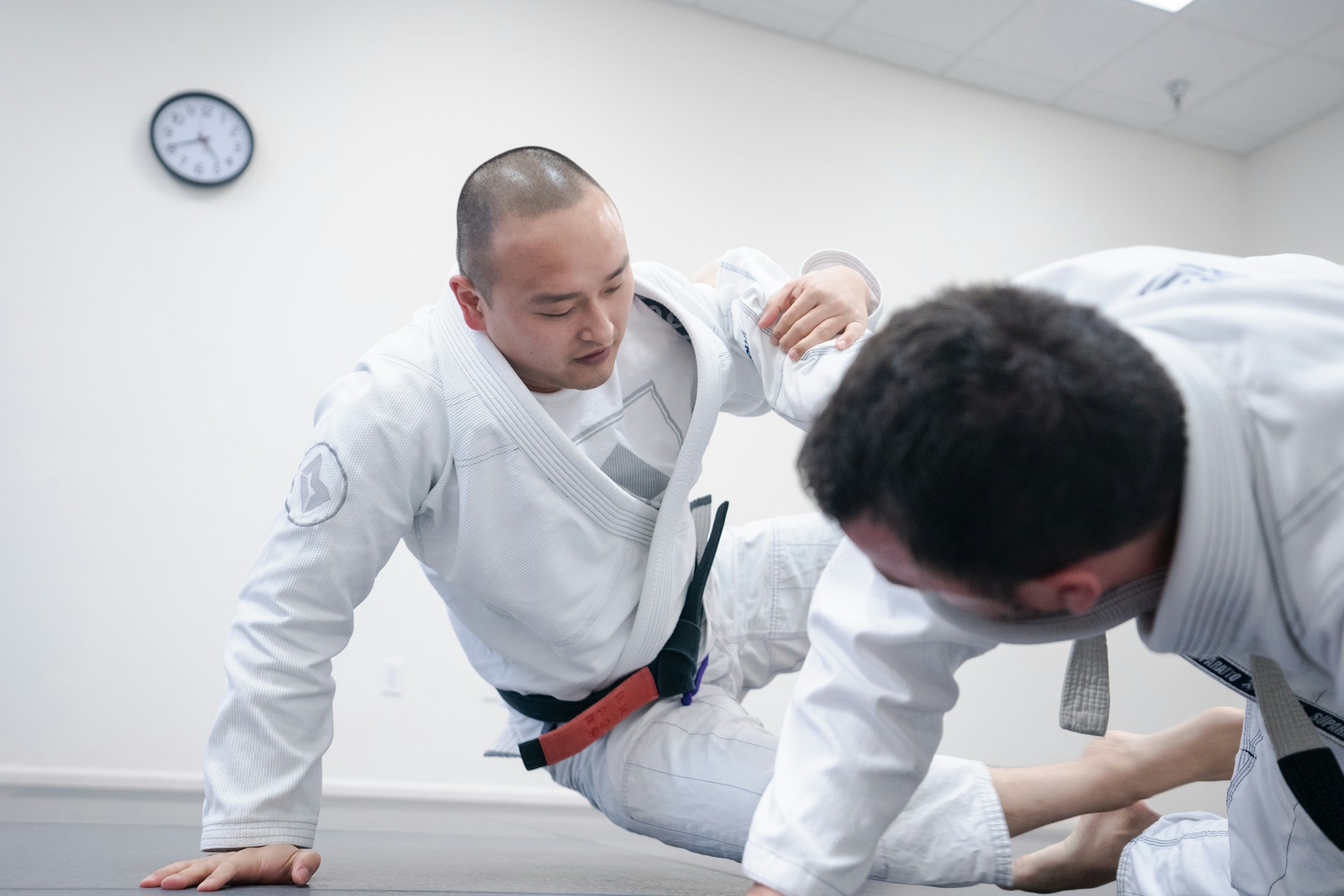
How to Incorporate Yoga into Your BJJ Routine for Better Flexibility
Brazilian Jiu-Jitsu (BJJ) demands flexibility, balance, and body awareness—all of which can be greatly enhanced through the practice of yoga for Brazilian Jiu-Jitsu. By integrating yoga into your BJJ routine, you can improve your flexibility, prevent injuries, and increase overall performance on the mats. In this article, we’ll discuss the benefits of combining yoga and BJJ and offer practical tips on how to incorporate yoga into your Brazilian Jiu-Jitsu training routine.
Why Yoga and Brazilian Jiu-Jitsu Are a Perfect Pair
Yoga and Brazilian Jiu-Jitsu share several key elements that make them complementary. Both disciplines focus on controlled movements, breath control, and body alignment. By adding yoga for BJJ to your routine, you can improve not only your flexibility but also your balance, strength, and mental focus—all critical for success in martial arts. This combination makes yoga an excellent tool for improving your overall BJJ performance.
1. Improve Flexibility for BJJ Techniques
Flexibility is essential for many BJJ techniques, especially those involving guard play, escapes, and submissions. Positions like the rubber guard or triangle choke require open hips, while a flexible spine and hamstrings can make transitions smoother. Yoga poses for Brazilian Jiu-Jitsu focus on increasing range of motion, which directly benefits your ability to move fluidly during rolls and sparring sessions.
Recommended Poses: Pigeon pose (for hip flexibility), Forward fold (hamstrings), and Cobra pose (spinal flexibility).
2. Boost Strength and Balance
Yoga for BJJ strength is not just about flexibility; it also builds functional strength. Many yoga poses engage stabilizing muscles that are often neglected in traditional strength training. This increased strength and balance help improve your posture and body control in Brazilian Jiu-Jitsu, especially when maintaining positions like mount or side control.
Recommended Poses: Warrior poses (for leg and core strength), Tree pose (balance), and Plank pose (core strength).
3. Enhance Breath Control and Relaxation
One of the most important yet overlooked aspects of Brazilian Jiu-Jitsu is breath control. During intense sparring sessions, it’s easy to become tense and lose focus on breathing, leading to exhaustion. Yoga breathwork for martial arts, such as Pranayama, emphasizes mindful breathing, which teaches you how to control your breath and stay calm under pressure. This mental calmness and breath control can make a significant difference during long rolls and competitions.
Recommended Practices: Diaphragmatic breathing, Ujjayi breathing (victorious breath), and Savasana (deep relaxation).
4. Prevent Injuries and Aid Recovery
In Brazilian Jiu-Jitsu, it’s common to experience muscle tightness or minor injuries due to the physical demands of grappling. Yoga for recovery in BJJ can help alleviate these issues by stretching tight muscles, reducing inflammation, and improving circulation. Regular yoga practice keeps your muscles and joints more pliable, which reduces the risk of strains, sprains, and overuse injuries.
Recommended Poses: Child’s pose (spine decompression), Reclining twist (spinal recovery), and Legs-up-the-wall (for circulation and recovery).
5. Develop Mental Focus and Mindfulness
Brazilian Jiu-Jitsu is often described as “physical chess,” requiring mental sharpness and focus. Yoga for mental clarity fosters mindfulness, helping you stay present and aware of your body and your surroundings. This mental discipline can translate to better focus during BJJ training, helping you anticipate your opponent’s moves and make smarter decisions during sparring.
Recommended Practices: Meditation, Mindful breathing, and Flow yoga (Vinyasa).
How to Incorporate Yoga into Your BJJ Routine
Incorporating yoga into your BJJ routine doesn’t have to be time-consuming. Here are some simple ways to get started:
- Pre-Training Warm-Up: Use dynamic yoga stretches like Cat-Cow and Downward Dog to loosen up muscles and joints before BJJ class.
- Post-Training Cool Down: After training, engage in gentle stretching with poses like Forward Fold and Reclining Twist to promote recovery and muscle relaxation.
- Dedicated Yoga Sessions: Aim for 1-2 yoga sessions a week, focusing on longer holds and deeper stretches to enhance flexibility and balance. Even 15-20 minutes of yoga for Brazilian Jiu-Jitsu can yield great results.
Conclusion
Incorporating yoga into your Brazilian Jiu-Jitsu routine can significantly enhance your flexibility, strength, and mental focus, making you a more well-rounded martial artist. Whether you’re looking to improve your guard game, prevent injuries, or simply become more mindful on the mats, yoga for BJJ is a powerful tool that complements BJJ perfectly.
At ChepstowBJJ, we encourage our students to explore different ways to optimize their training. Try adding yoga to your routine and experience the benefits first-hand!
A big thank you to Yoga With Adriene for providing many of the yoga videos that helped inspire the stretches and techniques mentioned in this article. Adriene’s accessible and thoughtful approach to yoga has made it easy for practitioners of all levels to incorporate yoga into their routines, greatly benefiting the Brazilian Jiu-Jitsu community. We’re grateful for the valuable resources that help enhance flexibility and mindfulness in martial arts training.


